Fresno Fire Sprinkler Systems: Design, Installation & Service
Fire sprinkler installation and annual inspections for Fresno and Clovis warehouses, ag-processing, apartments and new residential construction.
Installation · Inspection & testing · Retrofit · Backflow & fire pump service — Central Valley warehouses and ag-processing, apartments, and residential sprinkler requirements under California codes
Free Fire Sprinkler Quote
Fresno Fire Sprinkler Services
Sprinkler System Design & Installation (NFPA 13, 13R, 13D)
Engineered wet and dry sprinkler systems for new Fresno commercial, multifamily and residential construction, matched to the right NFPA standard.
Fire Sprinkler Inspection, Testing & Maintenance (NFPA 25)
Recurring inspection, testing and maintenance for Fresno buildings, with deficiency reports and documentation for the fire marshal and your insurer.
Retrofit & Tenant Improvement Sprinklers
Adding or modifying sprinklers in older commercial, warehouse and apartment buildings, and relocating heads when tenants change layouts.
Backflow, Standpipe & Fire Pump Services
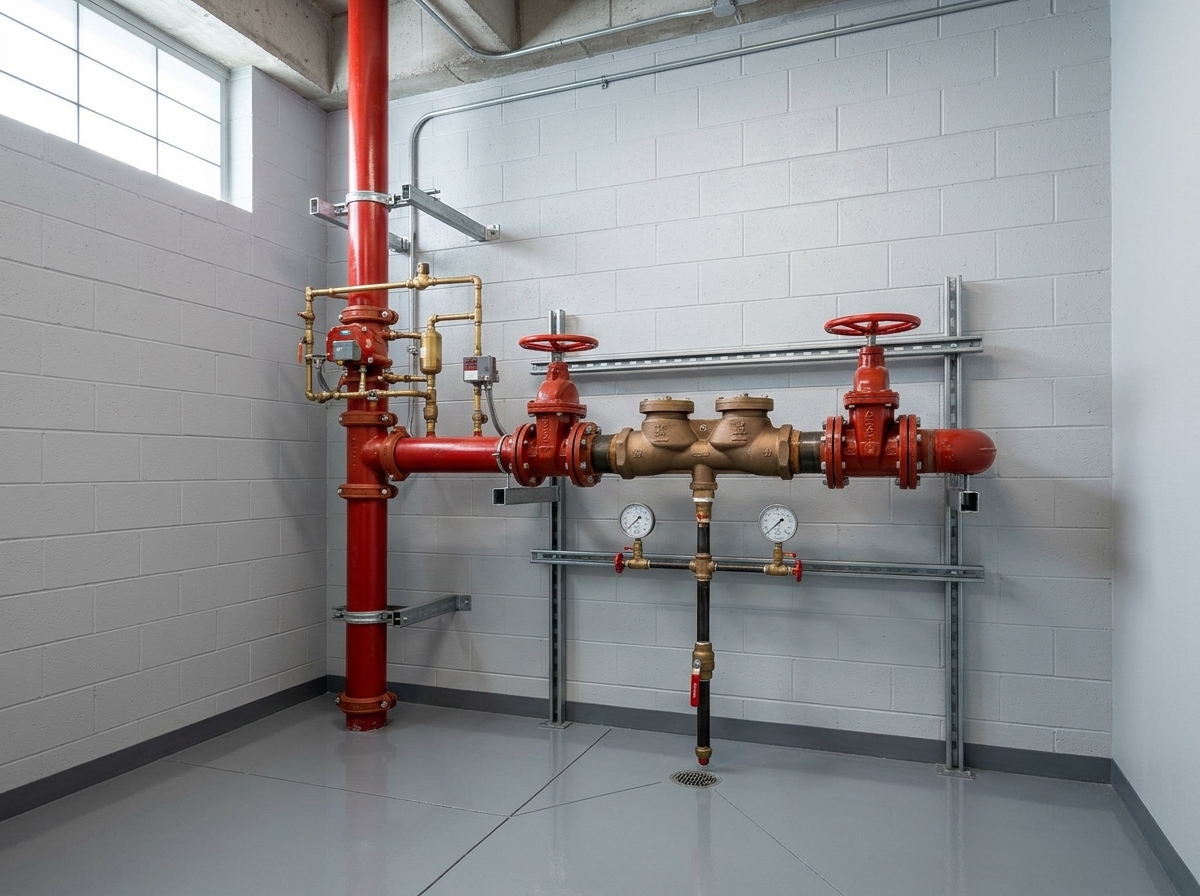
Backflow preventer testing, standpipe and fire pump service, and underground fire line work for Fresno properties.
Fire Sprinkler Systems We Install and Service
Areas We Serve
The Complete Guide to Fire Sprinkler Systems in Fresno and Clovis
Fresno sits in the middle of the San Joaquin Valley, and its building market looks different from the coastal California cities most sprinkler guides describe. The work here is driven by distribution warehouses, packing and cold-storage plants, apartment complexes, medical and school campuses, and a steady run of new single-family tracts on the north and east edges of town. Each of those building types lands on a different NFPA standard and a different review path.
For owners, the practical questions are usually one of four. Does a new building or a remodel trigger a sprinkler system? Which standard applies: NFPA 13 for most commercial buildings, NFPA 13R for low-rise apartments, or NFPA 13D for one- and two-family homes? Who reviews the plans? And once the system is live, who has to be told about the annual inspection? In Fresno, those answers depend on whether the parcel is in the City of Fresno, the City of Clovis, the City of Sanger, or unincorporated county land.
The City of Fresno has its own Fire Department prevention division that reviews sprinkler plans and, according to its published bulletins, expects electronic submittal of recurring inspection reports. Clovis runs a separate fire department with its own plan review and residential sprinkler design criteria. Unincorporated areas around Sanger are typically handled by the Fresno County Fire Protection District. A system designed for one agency's checklist can bounce when it crosses a boundary, so it pays to confirm the jurisdiction before drawings start.
Fresno owners also deal with more than new installs. Older downtown and Tower District buildings, 1960s through 1990s apartments, and aging ag-industrial sheds all need retrofit, tenant-improvement and recurring inspection, testing and maintenance work. Having one contractor design the system, install it, and then service it means the person who knows where every valve and drain is located is the same person who shows up for the annual report. Always confirm that any contractor you hire holds an active California C-16 Fire Protection license on the CSLB website before signing.
What Fresno's Buildings Look Like, and What Goes Wrong With Their Sprinklers
Downtown Fresno carries a layer of early twentieth-century masonry and high-rise buildings, including the tall 1920s office towers along Fulton Street, plus railroad-era warehouses along the Union Pacific and BNSF corridors. Many were built long before sprinkler rules, so any sprinklers in them were added later, in pieces. Typical findings include mixed pipe ages, obstructed heads above retrofitted ceilings, and floors that were converted to lofts or apartments without the system being re-evaluated for the new layout.
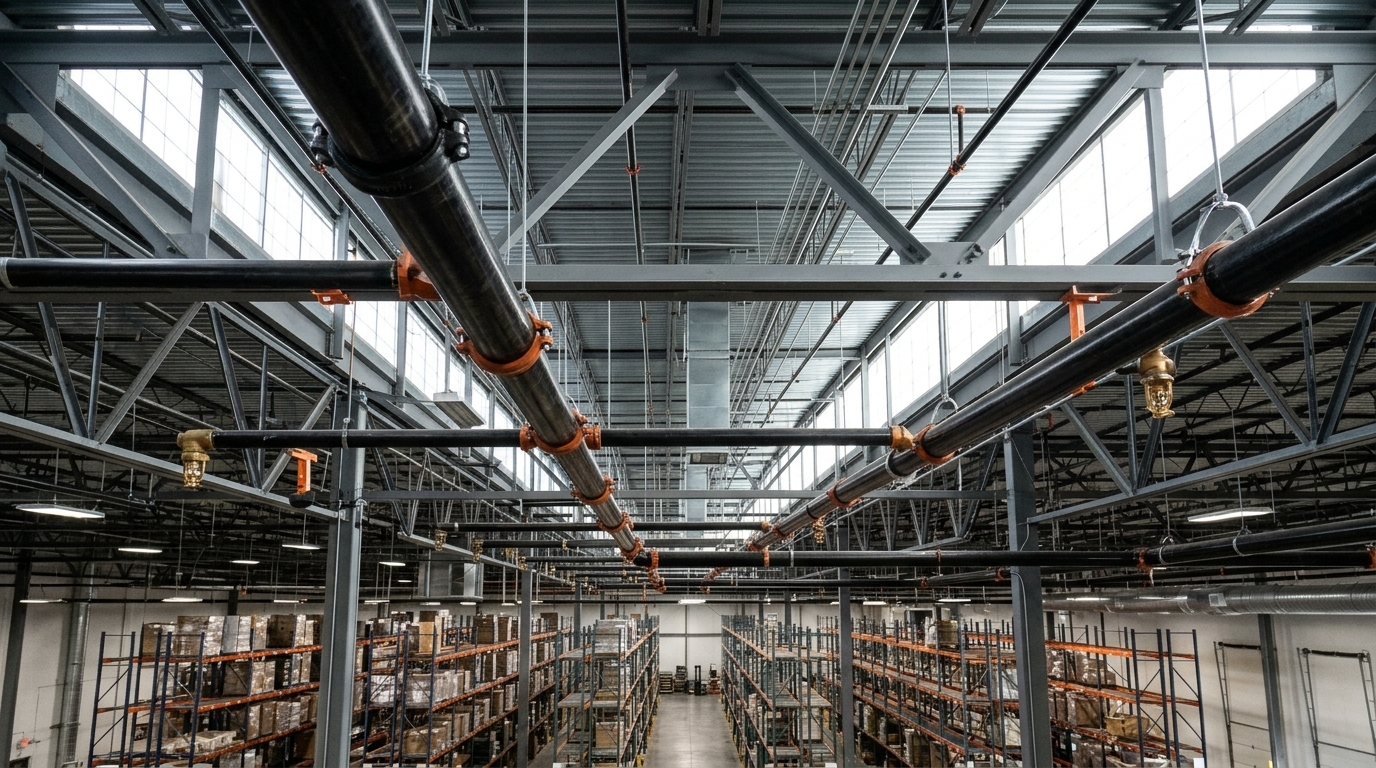
Outside the core, the valley's economy shows in its industrial stock. Large tilt-up distribution buildings, food-processing plants and refrigerated warehouses cluster along Highway 99 and the south and west sides of the metro area. High-piled storage, rack arrangements that change with every new customer, and freezer rooms where water-filled pipe is unsafe all complicate protection. Dry or pre-action systems and ESFR layouts must match the commodity actually stored, and tenants rarely tell anyone when the commodity changes.
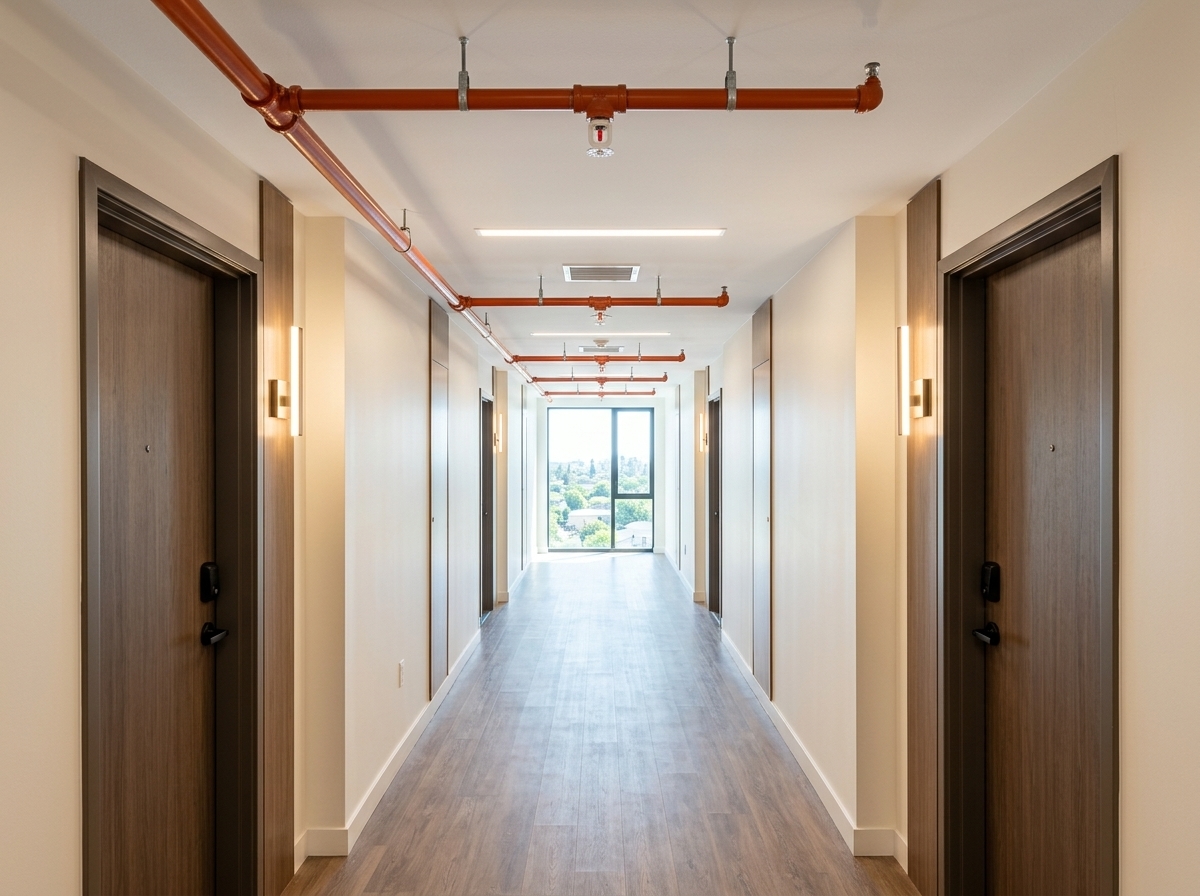
Residential construction is the third big category. Fresno and Clovis have spent decades building tract homes and apartment complexes outward, and California requires sprinklers in new one- and two-family homes and townhouses under CRC Section R313. Garden-style apartments from the 1970s through 1990s usually predate those rules, which means many have no sprinklers at all, while newer complexes use NFPA 13R systems with attic, balcony and concealed-space details that attract inspector comments if they are skipped. Confirm each building's occupancy and construction type with the fire prevention division before assuming a standard applies.
How Sprinkler Permits and Plan Review Work in the Fresno Area
Permitting authority: Fresno Fire Department, Fire Prevention and Investigations Division (City of Fresno); City of Clovis Fire Department; Fresno County Fire Protection District
Inside the City of Fresno limits, sprinkler plan review runs through the Fresno Fire Department's prevention and technical services staff, working with the city's development permitting. The department publishes a plan submittal acceptance checklist and a series of Fire Industry Bulletins, and it has stated that incomplete submittals may be rejected at intake. Inspections are scheduled online through the city's permit portal, and the department's bulletins call for the installing contractor to bring a signed NFPA 13 Contractor's Material and Test Certificate to the acceptance inspection. Check the current bulletins before each submittal because they change.
Which edition of the California Building Standards Code applies generally depends on when the permit application is submitted. The 2022 cycle took effect statewide on January 1, 2023, and the 2025 cycle was published to take effect January 1, 2026. Fresno has also adopted local amendments. Its bulletins describe residential sprinkler rules that go beyond the state baseline, such as extra domestic demand added to the sprinkler calculation and sprinklers in attached-garage storage rooms and closets. Treat those as items to confirm with the plan reviewer, not assumptions.
Clovis and the surrounding county districts are separate. Clovis has its own fire department, a fire protection permit application, and published residential sprinkler design criteria that dictate details such as water-service lengths and piping materials. Unincorporated areas near Sanger are generally routed to the Fresno County Fire Protection District's prevention bureau. What triggers a sprinkler requirement also differs by agency. New construction by occupancy, change of use, large additions and substantial residential remodels are common triggers, but thresholds are set by the adopted code and local amendments, so confirm with the specific agency.
What Drives Fire Sprinkler Cost in Fresno
Sprinkler pricing in the Central Valley depends on the building and the water more than on any rule of thumb per square foot. These are the local factors that tend to move a quote the most, and a site visit is the only reliable way to put numbers on them.
- Water supply and available fire flow
- The City of Fresno blends groundwater with treated surface water, and available pressure and flow vary across the grid. A flow test at the nearest hydrant often decides whether a building can run off the municipal supply or needs a fire pump or storage tank. Larger or newer sites on the edge of town can have different supply conditions than downtown, so ask for current flow data early.
- Occupancy and commodity classification
- A plain office needs a lighter design than a cold-storage building holding plastic-packaged produce. Storage height, rack layout and commodity class drive pipe sizes, head type (standard coverage, ESFR or in-rack) and water demand. Warehouses that change tenants can see the design basis change with them.
- Underground fire service and site work
- New buildings usually need a dedicated underground fire line from the street, with a backflow assembly, valve vaults and thrust restraint. Trenching through Valley soils, tying into an existing main and coordinating with the utility often add as much scope as the overhead piping. Underground work is typically reviewed as its own permit item.
- Heat and freeze protection details
- Summer attics and unconditioned warehouses can exceed ordinary head temperature limits, so higher-rated heads may be needed. Freezers and the occasional winter freeze at loading docks and open canopies call for dry, pre-action or antifreeze arrangements. Each choice changes both materials and recurring service.
- Existing-building conditions on retrofits
- Older downtown and Tower District buildings may hide concealed spaces, masonry that is difficult to core, tight ceilings and historic finishes that limit where piping can run. Retrofits tend to carry more investigation and patching than new construction in the same square footage.
- Plan review, fees and inspection scheduling
- Agency fees, resubmittals after review comments, and re-inspection fees for systems that were not ready all add cost. Complete drawings, current manufacturer data sheets and correct city addresses reduce the chance of a rejected submittal.
Seasons & Climate in Fresno
Fresno's summers are long and hot, with extended stretches of triple-digit afternoons. That affects sprinklers in two ways. Roof attics and unconditioned warehouse spaces can get hot enough that ordinary-temperature heads are the wrong choice, and installers working on roofs and in open buildings typically start early to avoid the afternoon peak. Large projects often schedule overhead pipe in attics and metal buildings for the cooler morning hours or shoulder seasons.
Winter brings tule fog, which the National Weather Service describes as a late-fall to early-spring pattern in the San Joaquin Valley, and nights that can drop to freezing even though the average low sits above it. That is not Midwest-level cold, but it matters for unheated loading docks, outdoor risers, fire department connections and exposed pipe. Rain and fog also slow underground fire line trenching and exterior work, so groundwork is often planned for the drier months. Winter is a good window for annual ITM visits and tenant-improvement work inside finished buildings.
Fire Sprinkler Project Timeline in Fresno
1. Scoping, jurisdiction check and water data (1-2 weeks)
Confirm the AHJ (Fresno, Clovis, Sanger or the county district), the occupancy, and the adopted code edition. Request a hydrant flow test or water-service data. This is the cheapest stage to catch a trigger or supply problem.
2. Design and hydraulic calculations (2-4 weeks)
A licensed designer prepares sprinkler drawings, hydraulic calculations and manufacturer data sheets that follow the agency's submittal checklist. Complex storage buildings or fire pumps often take longer.
3. Plan review and permit (2-6 weeks, varies by agency)
Reviewers return comments or approval. One published Clovis figure for initial review has been in the range of one to two weeks, but timing depends on workload and the quality of the submittal. Confirm current turnaround with the agency.
4. Underground and overhead installation (2-8 weeks)
The underground fire line is installed and tested first on new sites, followed by mains, branch lines and heads as the building progresses. Hydrostatic tests are typically witnessed or documented for the agency.
5. Acceptance inspection and certification (1-2 weeks)
Schedule the final inspection through the agency, with the signed contractor's material and test certificate in hand. Failed items mean a reinspection, so a pre-test walk-through is worthwhile.
6. Ongoing inspection, testing and maintenance (Recurring)
Once occupied, the system enters its inspection cycle. Fresno requires reports to be filed electronically, and the owner is responsible for keeping records and fixing deficiencies.
Fresno Fire Sprinkler FAQ
Who reviews fire sprinkler plans in Fresno?
Inside the City of Fresno, sprinkler plans are reviewed by the Fresno Fire Department's prevention and technical services staff, with permits issued through the city's permit system. Clovis has its own fire department with separate plan review, and unincorporated areas near Sanger are generally handled by the Fresno County Fire Protection District. Confirm your parcel's jurisdiction before drawings start, because each agency publishes its own checklist and local amendments.
Does my new house in Fresno or Clovis need sprinklers?
Generally yes. California's residential code, CRC Section R313, requires automatic sprinklers in new one- and two-family dwellings and townhouses, designed to NFPA 13D or the equivalent R313 provisions. Fresno's fire bulletins add local details, and Clovis publishes its own residential design criteria. Check the adopted edition and any local amendments with your building and fire plan reviewer before you finalize the design.
Do I need a special contractor license to install sprinklers in California?
Yes. The Contractors State License Board lists a C-16 Fire Protection classification that covers laying out, fabricating and installing fire protection systems, excluding electrical alarm work. Fitters doing the work on commercial and multifamily systems are also subject to State Fire Marshal certification rules. You can verify any contractor's license status for free on the CSLB website before hiring.
How often does a sprinkler system need to be inspected in Fresno?
Inspection frequency follows NFPA 25 as adopted in California, which includes recurring visual checks, annual testing and longer-interval items such as five-year internal pipe evaluations. Fresno's fire department expects third-party inspection reports to be filed electronically through The Compliance Engine. Your inspector should tell you which items are due and when, and the owner is responsible for correcting deficiencies.
Does a backflow preventer need testing too?
Yes. The City of Fresno's cross-connection control program requires approved backflow assemblies to be tested annually by a certified tester, with results reported through the city's tracking system. A fire sprinkler line often has its own assembly, so it can be due for testing at the same time as the sprinkler annual. Check which tester the city currently accepts.
Will a tenant improvement or remodel require sprinkler changes?
Often, yes. Moving walls or ceilings can leave heads blocked or poorly placed, so relocations or added heads usually go through the fire department for permit review. Large additions, a change of occupancy, or substantial work on older buildings can also trigger broader requirements under the adopted code and local amendments. Ask the plan reviewer early, before ceilings close.
Can Fresno's heat damage sprinkler heads or pipe?
Heat is a design factor, not usually a failure mode. Standard heads are limited to a maximum ambient ceiling temperature, and hot attics or sun-exposed warehouse ceilings can exceed it, so intermediate or higher temperature ratings may be required. Your designer should check the expected ambient temperature at each space, and inspectors check head types on annual visits.
How long does it take to get a sprinkler system approved and installed?
Planning on a couple of months from signed scope to final inspection is realistic for many commercial projects, but it varies. Design, agency review and installation each take weeks, and new buildings add underground work. Complete drawings, a current flow test and a ready-to-inspect system help avoid reviews and reinspections. Ask the agency for its current turnaround before you set a schedule.
Sources & Further Reading
Local requirements change. Always confirm current rules with the permitting agency before starting work.
- City of Fresno Fire Department (Fire Prevention, plan review, Fire Industry Bulletins)
- City of Fresno Department of Public Utilities (water supply and backflow / cross-connection program)
- The Compliance Engine (electronic fire protection system reporting)
- Fresno County Fire Protection District (prevention and planning bureau)
- City of Clovis (Fire Department and fire protection permits)
- City of Sanger
- California Contractors State License Board: C-16 Fire Protection Contractor classification
- California Office of the State Fire Marshal (fire sprinkler fitter certification and Title 19)
- California Building Standards Commission: California Building Standards Code (CBC, CRC, CFC)
- ICC: California Fire Code and California Residential Code (Section R313)
- NFPA 13: Standard for the Installation of Sprinkler Systems
- NFPA 25: Standard for the Inspection, Testing, and Maintenance of Water-Based Fire Protection Systems
- National Weather Service Hanford (San Joaquin Valley climate, tule fog)
- Old Fig Garden neighborhood
- Tower District
- Downtown Fresno Partnership